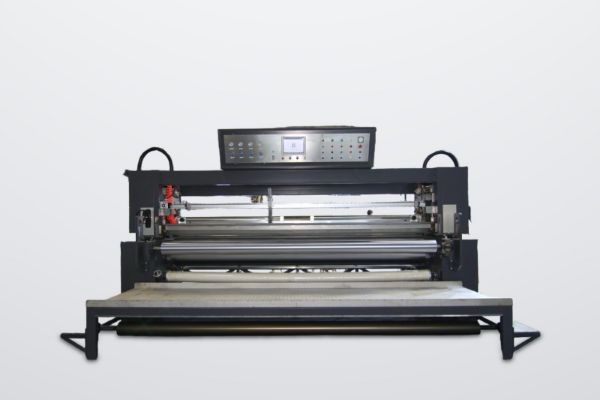
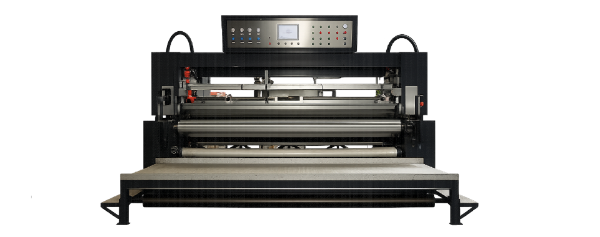
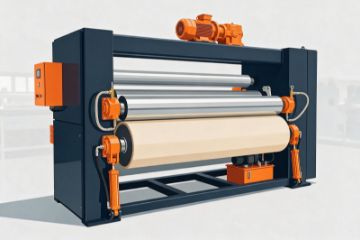
Knife coating machine with a chrome-plated back cylinder, doctor and floating knives, independent right and left gap setting and a frequency-inverter AC drive; working width and the other technical requirements are met according to the requirements of the line it will run on.
Knife coating machine with single or double head for coating widths up to 5400 mm on carpet, running a Ø500 mm chrome cylinder, doctor + floating knife and a frequency-inverter AC drive.
Knife coating machine with a chrome-plated back cylinder, doctor and floating knives, independent right and left gap setting and a frequency-inverter AC drive; working width and the other technical requirements are met according to the requirements of the line it will run on.
RAM (Stenter) Designed for precise heat setting, width control and dimensional stabilization, our stenter machines ensure uniform fabric treatment and consistent finishing quality. Engineered for high performance, energy efficiency and reliable operation across a wide range of textile applications.
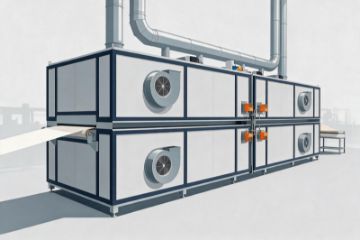
Dryer Machine Our textile drying machines provide efficient and uniform moisture removal, ensuring consistent drying quality and reliable process performance. Designed for energy efficiency and flexible operation, they are suitable for a wide range of textile drying applications.
Designed to improve fabric surface smoothness and appearance, our smoothing calenders provide uniform pressure and consistent finishing results. Engineered for reliable performance, they enhance fabric quality, surface uniformity and finishing efficiency across a wide range of textile applications.
Write your question and our technical team will answer within 1 business day.
Strictly necessary cookies keep the site working; functional and analytics cookies are used only if you consent. You can change your decision at any time via the "Cookie Preferences" link in the footer.
Cookie Policy
Cookie Preferences
Required for the session, security and your language choice; always on.
Lets us record which source (campaign) brought your enquiry; kept for the session only.
Used for visit statistics and quote conversion measurement.