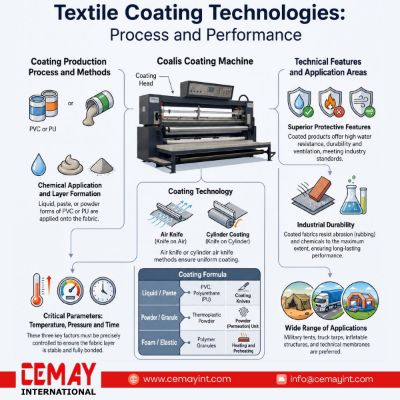
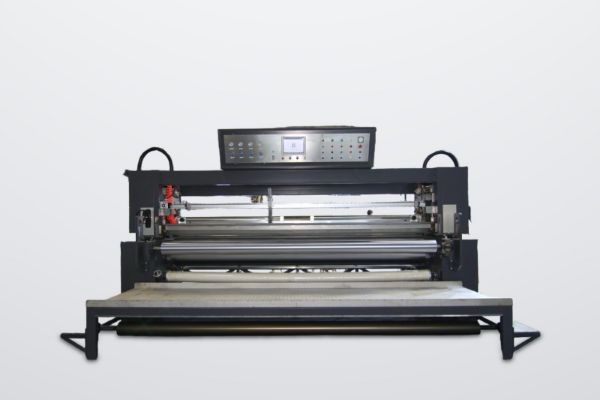
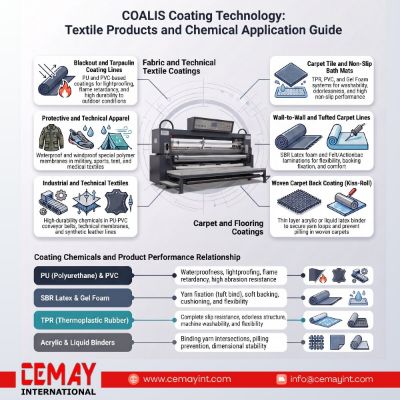
Four chemical families are used in fabric and carpet coating: PU/PVC, SBR latex and gel foam, TPR and acrylic binders. What does each add to the product, and which line unit does it call for?
Blog
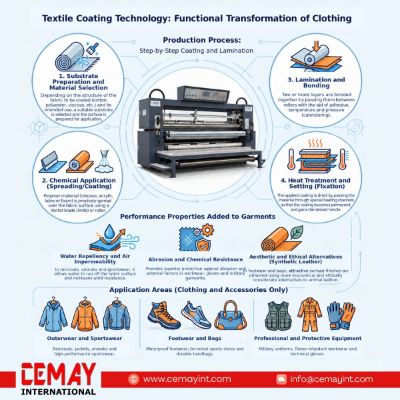
In apparel, coating deals with one layer and lamination with two or more. The four-step process runs both together, and what comes out spans raincoats to technical gloves.
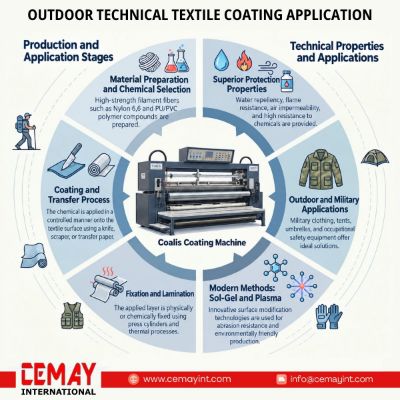
Outdoor technical textile coating runs in four stages and gives the fabric four protection properties. Here are the stages, where sol-gel and plasma come in, and which products the result goes to.
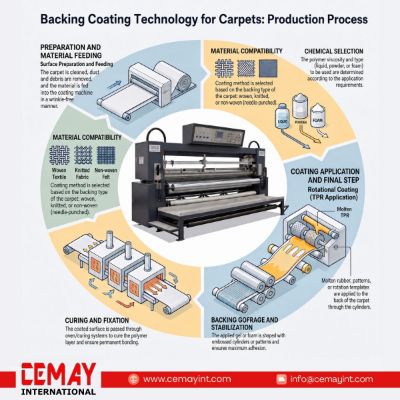
On a carpet backing line the result is settled not by one unit but by the order of six steps. Here is the running order from feeding to fixation, and what each step decides.
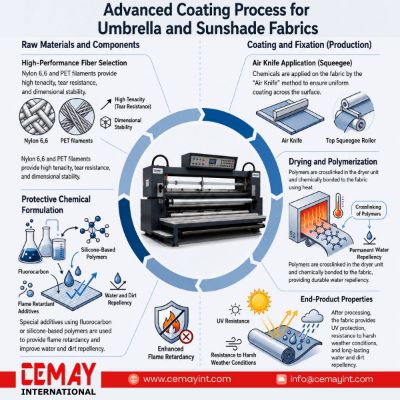
Two things settle the result on an umbrella or sunshade fabric: which filament you start from, and whether the polymers crosslink in the dryer unit. Here is the process from raw materials to fixation.
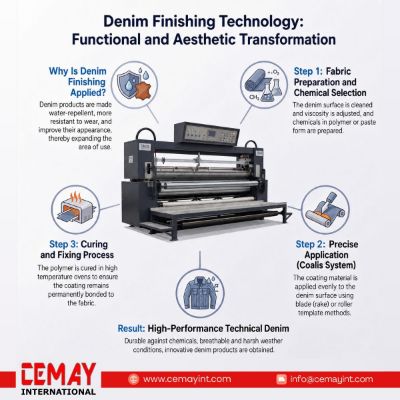
Denim finishing makes denim water-repellent, more resistant to wear and better looking, which expands where it can be used. Here is what each of the three steps does and what comes out at the end.
A coating is not applied to the fabric in one single way but in three forms: liquid/paste, powder/granule and melt. Which form you work in also decides which unit the line has to carry.
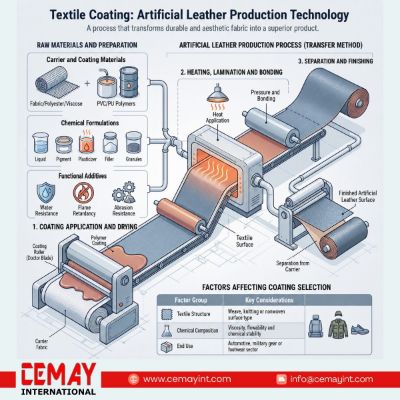
Artificial leather is produced by spreading a polymer coating onto a carrier first and transferring it to the textile with heat and pressure. Here are the three stages of the transfer method and the three factor groups that settle the coating.
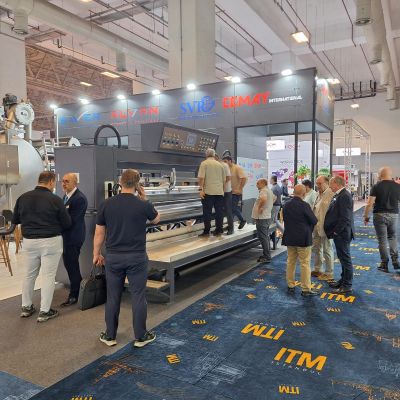
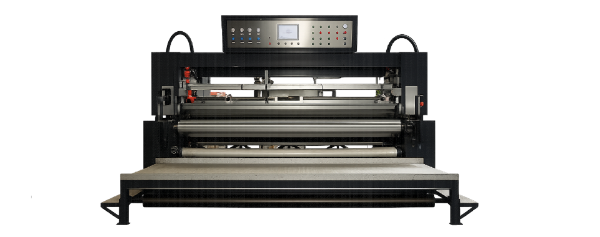
We met you at ITM 2026, the International Textile Machinery Exhibition held in Istanbul on 9–13 June 2026, at hall 12 / booth 1219C — where we exhibited a working coating and lamination production line.