



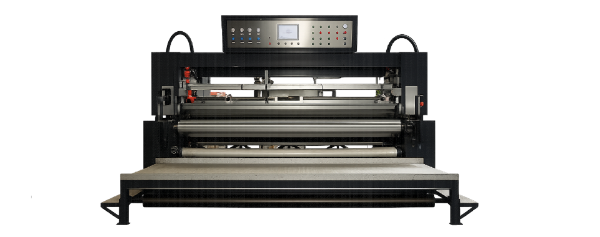
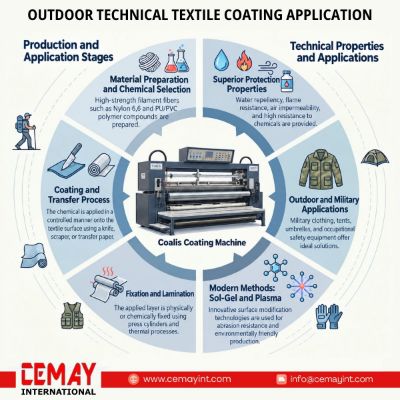
Outdoor technical textile coating is the controlled application of a PU or PVC polymer compound onto a high-strength filament fabric, fixed with press cylinders and thermal processes. Production runs in four stages, and the properties the fabric gains are the output of those four.
What are the four production stages?
| Stage | What is done |
|---|---|
| 1. Material preparation and chemical selection | High-strength filament fibers such as Nylon 6,6 and PU/PVC polymer compounds are prepared |
| 2. Coating and transfer process | The chemical is applied in a controlled manner onto the textile surface using a knife, scraper or transfer paper |
| 3. Fixation and lamination | The applied layer is physically or chemically fixed using press cylinders and thermal processes |
| 4. Modern methods: sol-gel and plasma | Innovative surface modification technologies are used for abrasion resistance and environmentally friendly production |
What is selected during material preparation?
Two things together: the base fibre and the polymer. On the fibre side, high-strength filament fibers such as Nylon 6,6; on the chemical side, PU or PVC polymer compounds. On an outdoor fabric the strength comes from the fibre rather than the coating; the coating adds protection on top of it.
How is the chemical applied to the textile surface?
By one of three routes: a knife, a scraper or transfer paper. The same word decides all three — the application has to be controlled. Knife and scraper meter the chemical straight onto the fabric; transfer paper forms the layer on paper first and then carries it over.
Is fixation physical or chemical?
It can be either. The applied layer is physically or chemically fixed using press cylinders and thermal processes. That is why lamination belongs in this step: fixation is not just drying, it is joining the layer to the fabric.
What are sol-gel and plasma for?
Both are innovative surface modification technologies, used for two things: abrasion resistance and environmentally friendly production. Their place as the fourth stage says the rest: this is a step that reaches the surface after coating and fixation are done.
What does coating add to an outdoor fabric?
- Water repellency
- Flame resistance
- Air impermeability
- High resistance to chemicals
The four together turn an outdoor fabric into a material that can stay outside for a long time.
Where are these fabrics used?
Military clothing, tents, umbrellas and occupational safety equipment. All four are products under constant exposure, and all four want the same set of properties at once.
You can look through the line on the Outdoor Technical Textile Coating page. For the formulation detail on the umbrella side see the advanced coating process for umbrella and sunshade fabrics, for the safety side protective textiles, and for tents and covers the Tarpaulin Coating Line page. To discuss how the line should be configured for your own product, reach us through the quote request form.
Frequently Asked Questions
What stages make up outdoor technical textile coating?
Four: material preparation and chemical selection, the coating and transfer process, fixation and lamination, and modern surface modification methods such as sol-gel and plasma.
How is the chemical applied in outdoor technical textile coating?
In a controlled manner onto the textile surface using a knife, scraper or transfer paper. The applied layer is then fixed physically or chemically using press cylinders and thermal processes.
What properties does coating give an outdoor fabric?
Water repellency, flame resistance, air impermeability and high resistance to chemicals. Those are what military clothing, tents, umbrellas and occupational safety equipment are after.